
Update from Syria: A Handful of Wildflowers
May 20, 2026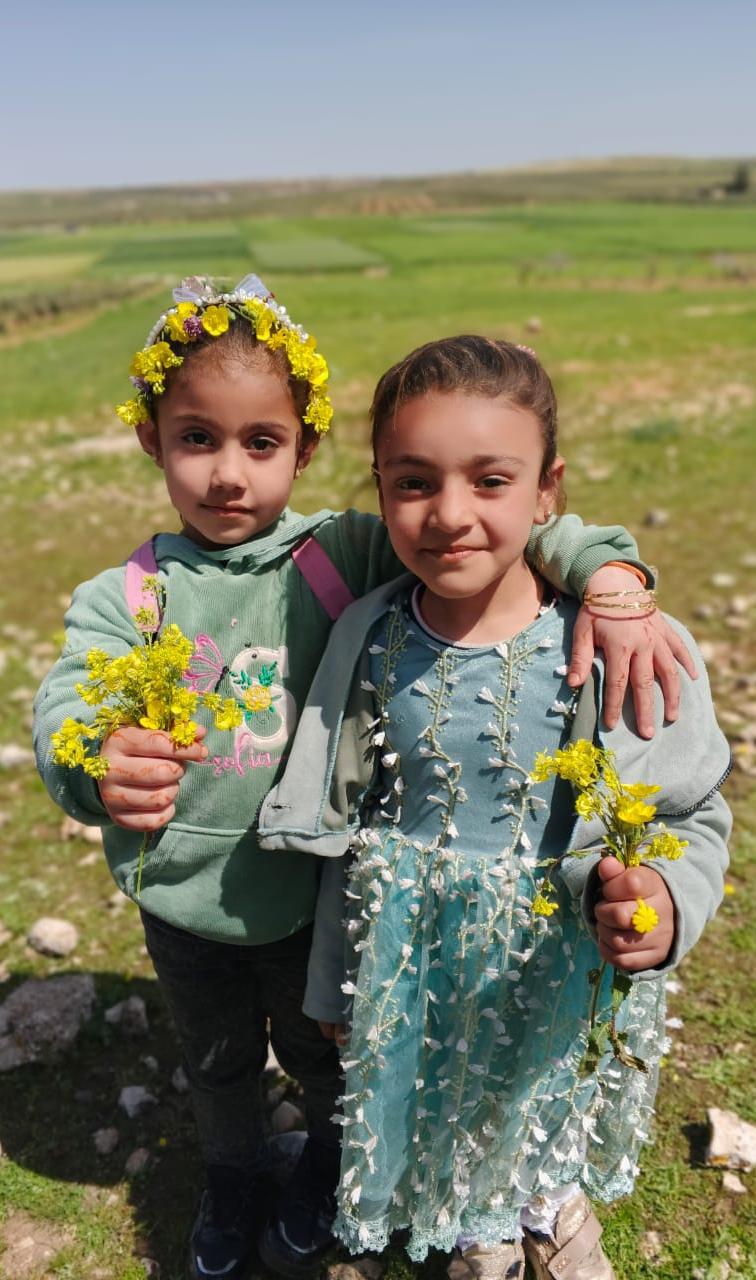
The countryside around Qabasin doesn’t offer much to the eye. Flat, dry, and dust-pale, it’s the kind of landscape that seems to hold its breath, waiting for something that rarely comes. For the children who grow up in these villages, scattered across eight different communities in one of Syria’s most under-resourced regions, the world beyond their immediate surroundings can feel very far away.
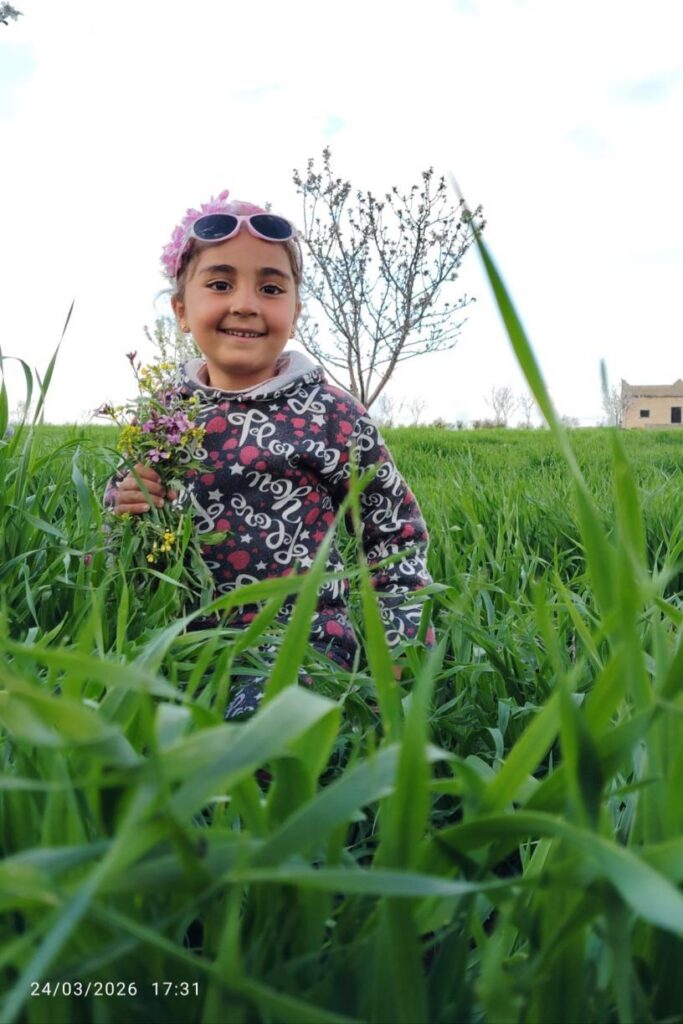
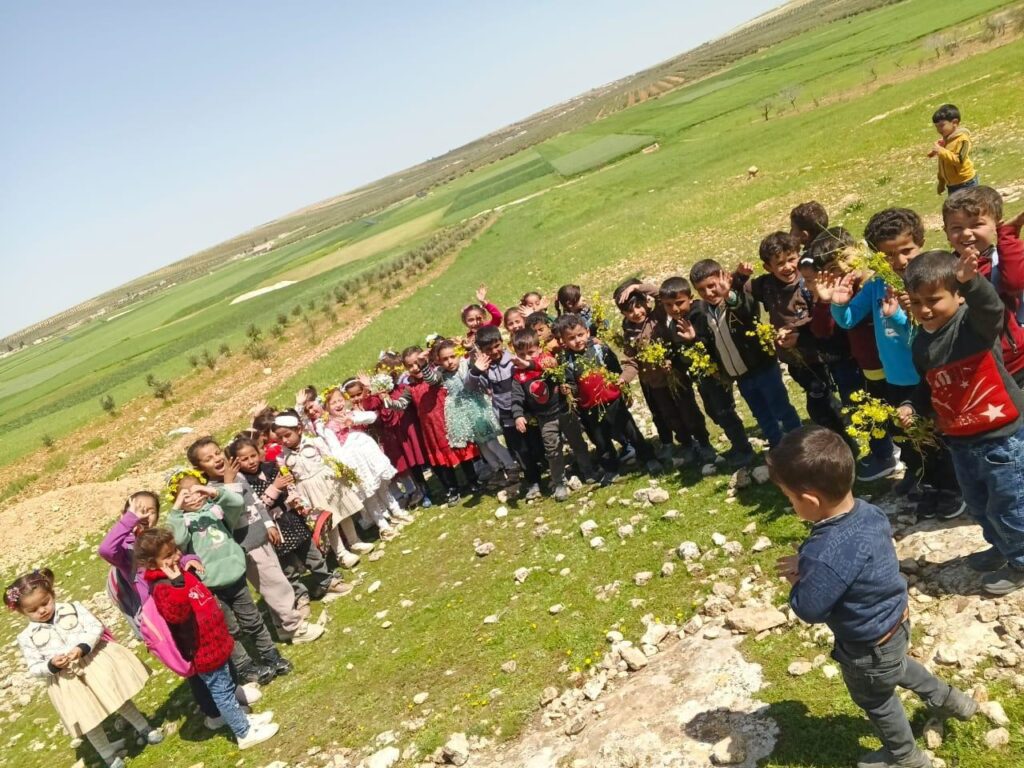
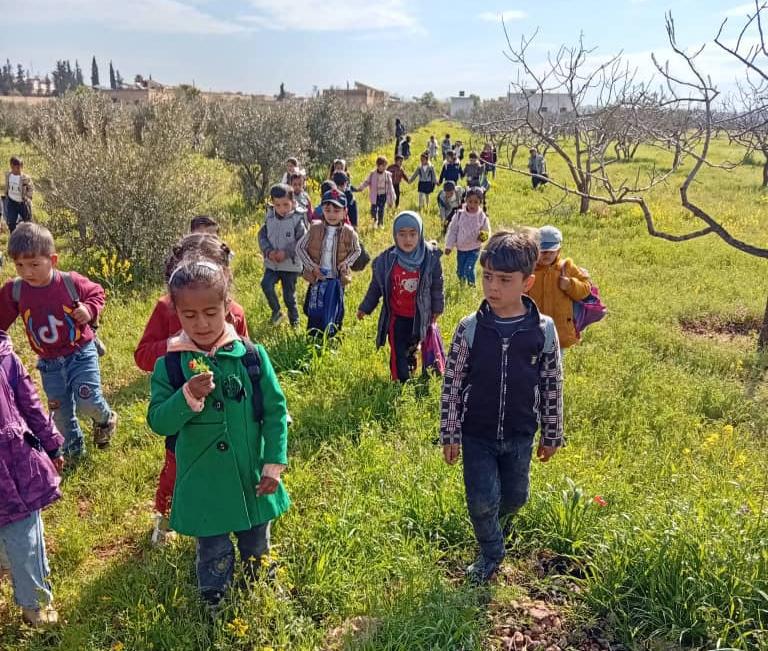
That’s partly why, when the rains came this spring, heavy and unexpected, the first in several years, our teachers didn’t hesitate. They took the children outside.
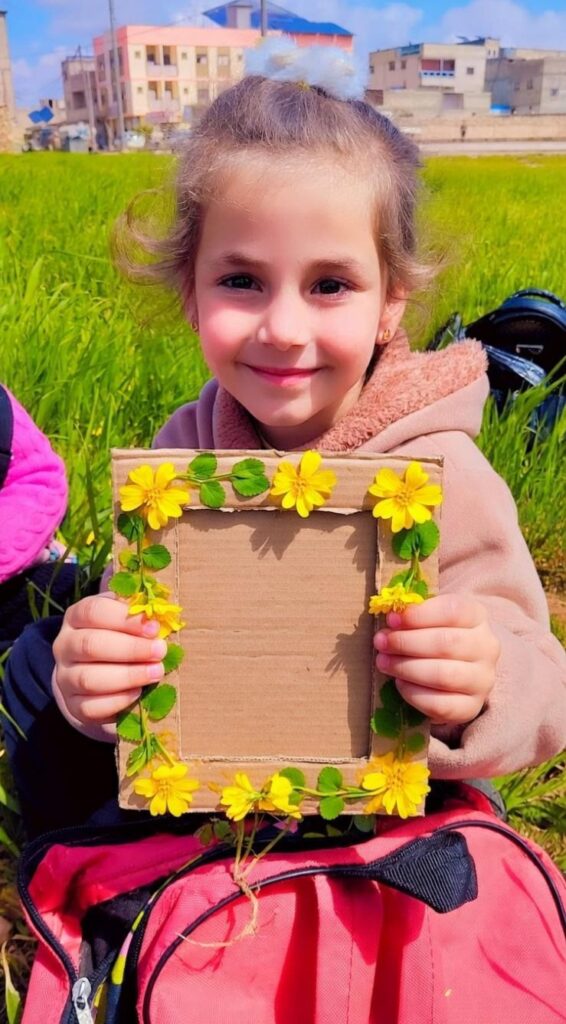
Into fields that had turned, almost overnight, from cracked earth to something softer. Into meadows where wildflowers had pushed through the mud. For some of these children, it was the first time they had seen their landscape like this: green, wet, briefly alive. They gathered flowers with their hands. They painted what they saw. They pressed blooms onto paper and took them home.
It was a field trip. But in a region where so little is taken for granted, it was also something much more than that.
What’s Happening in the Classroom
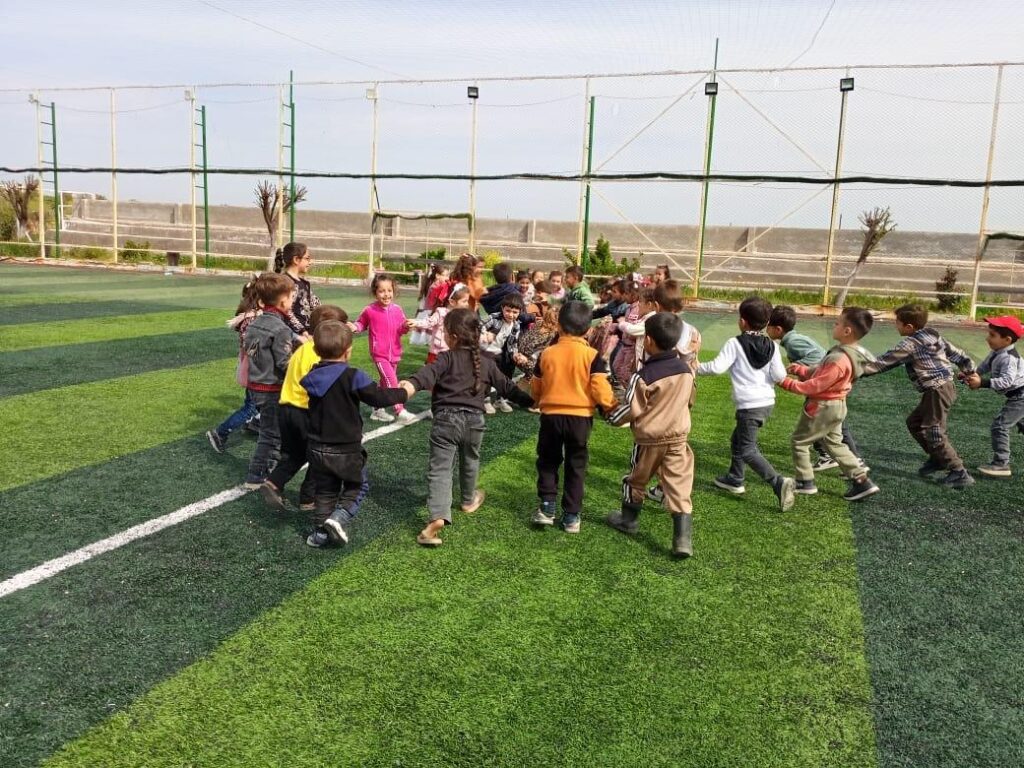
The Qabasin early years programme currently reaches 340 children across 17 classes in eight villages. Most are well into their sixth phase of an eight-phase Arabic language curriculum, having already learned twenty letters in their written forms and begun building simple words and sentences. Alongside language, the children are exploring mathematics, counting, writing numbers, simple addition and subtraction, and this month worked through a hands-on programme dedicated to the five senses, with a different sense explored each week.
In April, two of our supervisors made a field visit to centres in the Qabasin area, observing teaching directly, reviewing documentation, and providing on-the-spot training and guidance to the teaching team. What they found was encouraging. Across the centres, teachers were committed, present, and delivering their sessions with care. In the strongest classrooms, the atmosphere was warm and purposeful, with children visibly engaged and activities implemented with growing confidence. Where there is room to develop, our supervisors are working alongside teachers to build on what’s already there: deepening classroom interaction, strengthening the connection with parents, and making sure attendance stays consistent.
These teachers are in their first year. The supervision and support they receive now will shape the kind of educators they become.
The Bigger Picture
What comes through clearly in the field reports from Qabasin is how much is being held together with very little. These are communities living in the long aftermath of conflict, in a region that receives scant international attention and fewer resources still. The children attending our centres may not have access to a functioning state school system, and many will have experienced disruption that no child should have to carry.
And yet in classrooms decorated with the children’s own artwork, flowers painted from a rare spring afternoon, letters carefully formed for the first time, something is quietly and steadily happening.
Our teachers are showing up. Our supervisors are visiting, observing, and supporting. And 340 children are learning to read, to count, to make sense of the world around them, and occasionally, when the rain comes and the fields turn green, to go outside and see it differently.